Understanding Events Cyclicality and Natural Phenomena
Events Cyclicality and Natural Phenomena refer to the recurring patterns observed in nature and human experiences. These cycles, whether daily, seasonal, or long-term, shape our understanding of time, change, and continuity. From the rising and setting of the sun to the ebb and flow of economic trends, recognizing these patterns helps us navigate life more effectively. In a world increasingly driven by data and design, visual symbols that represent these cycles are becoming essential tools for communication and storytelling.
The Significance of Cyclicality in Modern Contexts
Modern society is built on systems that rely on predictable rhythms. Whether it's the annual harvest cycle, the business quarter, or the digital content calendar, cyclicality underpins many aspects of daily life. This concept is not just about repetition—it’s about understanding how events influence one another and how they can be managed or optimized. As businesses and individuals seek efficiency, the ability to recognize and work with natural cycles becomes a valuable skill.
In creative fields, cyclicality influences design choices, narrative structures, and user experience. A circular arrow or whirlwind-inspired icon can visually communicate the idea of ongoing movement, progress, and renewal. These symbols are especially relevant in eco-conscious initiatives, where sustainability and continuous improvement are core values.
How the Minimal Black Line Vector Icon Reflects Cyclicality
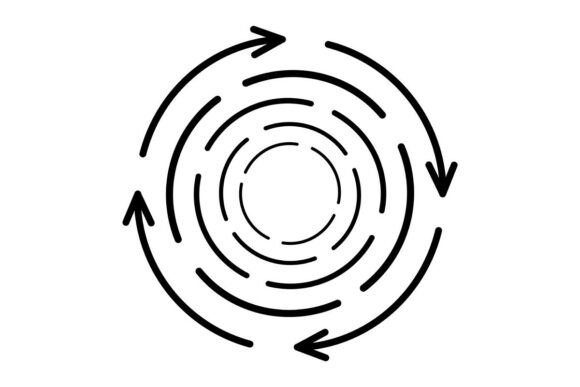
The minimal black line vector icon, featuring a circular arrow and a whirlwind-inspired shape, captures the essence of cyclicality in a simple yet powerful way. Its clean lines and dynamic form make it adaptable across various platforms, from UI design to infographics. The icon symbolizes flow, progress, and continuity—key elements in both natural processes and human endeavors.
This design is ideal for conveying concepts like time, transformation, and innovation. It works well in presentations, branding, and educational materials where clarity and visual impact are important. By using such an icon, creators can communicate complex ideas without overwhelming the audience, making it a versatile tool for modern communication.
Trends and Shifting Needs in Design and Communication
As technology evolves, so do the ways we interact with information. Users now expect visuals that are not only aesthetically pleasing but also meaningful. The demand for intuitive, symbolic representations has increased, particularly in digital environments. Icons that reflect natural phenomena or cyclical patterns help users grasp abstract concepts quickly and efficiently.
Businesses and educators are increasingly turning to such symbols to simplify complex ideas. For example, a circular arrow might represent a process that repeats itself, while a whirlwind could indicate change or growth. These icons serve as visual shortcuts, helping audiences connect with content on a deeper level. In this context, the minimal black line vector icon becomes more than just a graphic—it becomes a language of its own.
Practical Applications Across Industries
The versatility of the minimal black line vector icon makes it applicable in a wide range of industries. In environmental science, it can illustrate the balance of ecosystems or the importance of sustainable practices. In technology, it can represent iterative development or the continuous flow of data. In marketing, it can symbolize brand evolution or customer journey mapping.
For UI/UX designers, the icon offers a subtle way to guide user interactions. A circular arrow might indicate loading, refreshing, or progression, while a whirlwind could suggest a dynamic or evolving feature. These visual cues enhance usability and create a more engaging user experience. In presentations, the icon can be used to highlight themes of growth, change, or renewal, reinforcing key messages without distraction.
Why Attention to Cyclicality Matters Today
There is a growing awareness of how natural cycles influence our lives, from climate patterns to personal productivity. People are beginning to see the value in aligning their actions with these rhythms rather than fighting against them. This shift in perspective is reflected in lifestyle choices, business strategies, and even mental health practices.
For instance, the rise of mindfulness and intentional living often involves recognizing and respecting natural cycles. Similarly, in business, companies are adopting agile methodologies that mirror the fluidity of natural processes. The minimal black line vector icon serves as a reminder of these principles, offering a visual representation of the interconnectedness of all things.
Recommendations for Using the Icon Effectively
To maximize the impact of the minimal black line vector icon, consider the following tips:
- Context is key: Choose the right placement and size based on the message you want to convey. A small icon may work well in a dashboard, while a larger version could be used in a presentation.
- Combine with text: Pair the icon with clear labels or descriptions to ensure the meaning is understood, especially in diverse or international settings.
- Use consistently: Maintain a uniform style across different platforms to reinforce brand identity and user recognition.
- Test for clarity: Ensure the icon is legible at different scales and in various backgrounds. Avoid overcomplicating the design with unnecessary details.
By following these guidelines, creators and professionals can leverage the icon to enhance communication and add depth to their visual storytelling.
Looking Ahead: The Future of Cyclicality in Design
As we move further into the digital age, the role of visual symbols like the minimal black line vector icon will continue to expand. With the increasing emphasis on sustainability, user-centered design, and data-driven decision-making, there is a greater need for tools that simplify complexity and highlight connections.
Designers and communicators who understand the power of cyclicality will be better equipped to meet the demands of modern audiences. Whether through eco-friendly branding, interactive interfaces, or educational content, the ability to represent flow and continuity visually will remain a critical skill. The icon is not just a symbol—it’s a reflection of our evolving relationship with time, nature, and progress.